
Other Minerals
Other Minerals
Feldspar
Feldspars are complex series of aluminosilicates with varying amounts of potassium, sodium, calcium. Common amongst these are the potash felspars called orthoclase and microcline (K2 O.Al2 O3 .6SiO2 ), sodium felspar called albite (Na2 O.Al2 O3 .6SiO2 ) and calcium felspar called anorthite (CaO.Al2 O3 .2SiO2 ). The sodium and calcium felspars form a continuous series of solid solutions and are together termed plagioclase felspars.
Felspars occur in a variety of colours, pink, brown and grey felspars are known to be common.
It is a crucial raw material in ceramics, glass, and paint due to its fluxing properties, reducing melting temperatures and enhancing durability.
Key Features
- Types: Potassium (K-Feldspar) & Sodium (Na-Feldspar)
- Hardness: 6–6.5 Mohs
- Appearance: White, pink, or gray crystalline structure
Industrial Applications:
- Glassmaking (lowers melting point for energy efficiency)
- Ceramics (tiles, sanitaryware, dinnerware)
- Paints & Coatings (improves scratch resistance)
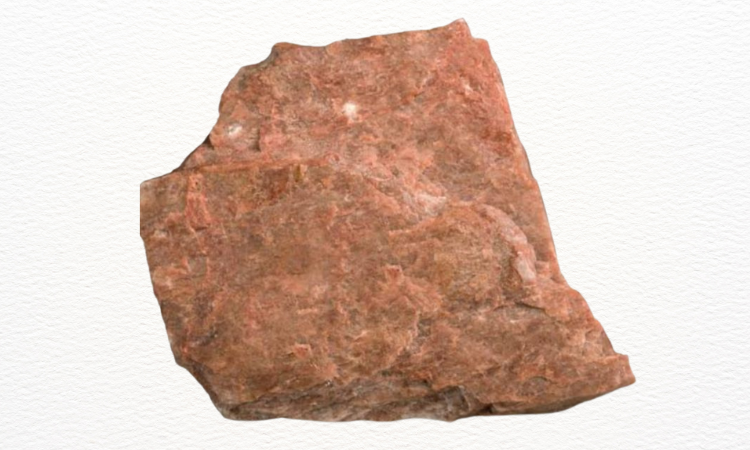
Did You Know? Over 50% of feldspar mined globally is used in glass production. Feldspar are gemstones too, Moonstone, Sunstone and Labradorite are few commonly used varieties.
Quartz – The Versatile Silica Mineral.
Quartz is Silicon-di-Oxide with a chemical formula of SiO2. It’s formed by a network of silicon-oxygen tetrahedra, where each oxygen atom is shared between two tetrahedra. The atoms are arranged in a continuous framework, giving quartz its hard crystalline structure. It Occurs as massive crystalline quartz in veins or pegmatites.
Quartz (SiO₂) is prized for its hardness, thermal stability, and piezoelectric properties, making it indispensable in electronics, optics, and construction.
The crystalline variety of quartz are vein quartz (massive crystalline quartz); milky quartz (white, translucent to opaque); ferruginous quartz (containing brown limonite and red haematite and almost opaque); aventurine quartz (containing glistening flakes of mica or haematite).
Gem varieties of Quartz are cat’s eye (opalescent greenish quartz with fibrous structure); rock crystal (clear, colourless, well-crystallised transparent quartz); amethyst (clear-purple or violetblue), transparent quartz; rose quartz; smoky quartz.
Crypto-crstaline varieties of Quartz are chalcedony, agate, jasper, onyx, flint and chert.
Key Features
- Hardness: 7 (scratch-resistant) Mohs
- Forms: Crystalline, powder, silica sand
- Purity Levels: 99.5%+ for high-tech applications
Industrial Applications:
- Semiconductors & Electronics (quartz oscillators, solar panels)
- Foundry & Construction (silica sand for concrete)
- Gemstones & Jewelry (amethyst, citrine, rose quartz)
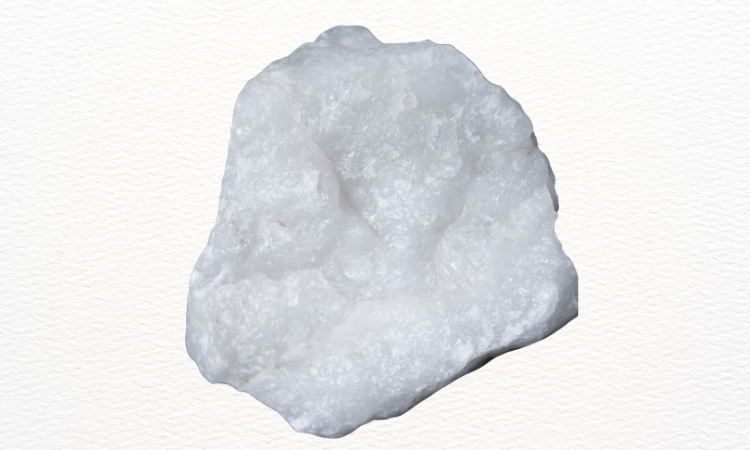
Quartz crystals are used in watches for precise timekeeping. It’s mention is found in Sundar-Kand “ फटिक सिला बैठे द्वौ भाई। परे सकल कपि चरनन्हि जाई॥ means “दोनों भाई स्फटिक शिला पर बैठे थे। सब वानर जाकर उनके चरणों में गिर पड़े.”. Quartz is called sphatic in Sanskrit.